Lao National
Genebank
18,000
The Plant Genetic Resources Conservation Unit, also known as the Lao National Genebank (LNG), was established in 1995 within the Rice Research Center of the National Agriculture and Forestry Research Institute (NAFRI), under the Ministry of Agriculture and Forestry. The seed genebank currently holds 18,851 accessions from 85 species, while the field genebank conserves 300 accessions from 32 vegetatively propagated crops. Additionally, the in vitro collection includes 600 accessions of stevia, taro, cassava, banana, and other crops.

Cereals
rice, maize, millet, sorghum
Grain legumes
bean, mung bean, cowpea
Vegetables
eggplant, yard-long bean, luffa, pumpkin, brassica, chili, cucumber, tomato
Roots and tubers
cassava, sweetpotato, taro, yams (field genebank)
Fruit
banana, citrus, mulberry, mango (field genebank)
Industrial crops
wild sugarcane
Background
The Plant Genetic Resources Conservation Unit or Lao National Genebank (LNG) was established in 1995 within the Rice Research Center of NAFRI, Ministry of Agriculture and Forestry. In 2006, it was renamed the Plant Resources Center. The initial basis of its collection was 15,000 farmers’ varieties of short- and long-grain rice collected in collaboration with the International Rice Research Institute (IRRI). There are also conservation units within other NAFRI research centers, including the Horticultural Research Center, and these are linked with the LNG.
About Lao National Genebank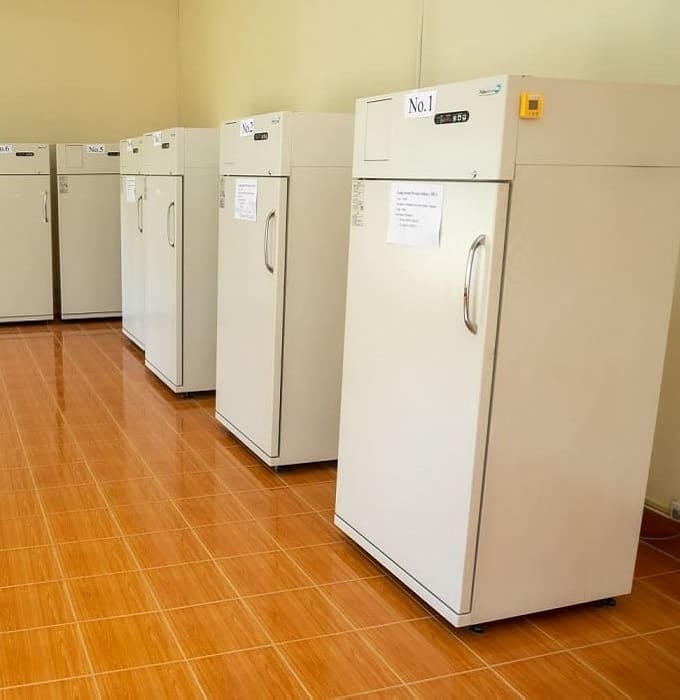
Facilities Of
Genebank
Seed samples at the main genebank are stored in freezers and −20° C for long-term storage and at between 5° C and 10° C for medium-term storage. The seed is kept in a variety of containers, including foil packets, paper bags and envelopes, plastic Ziplock bags and screw-top glass jars.
View All Facilities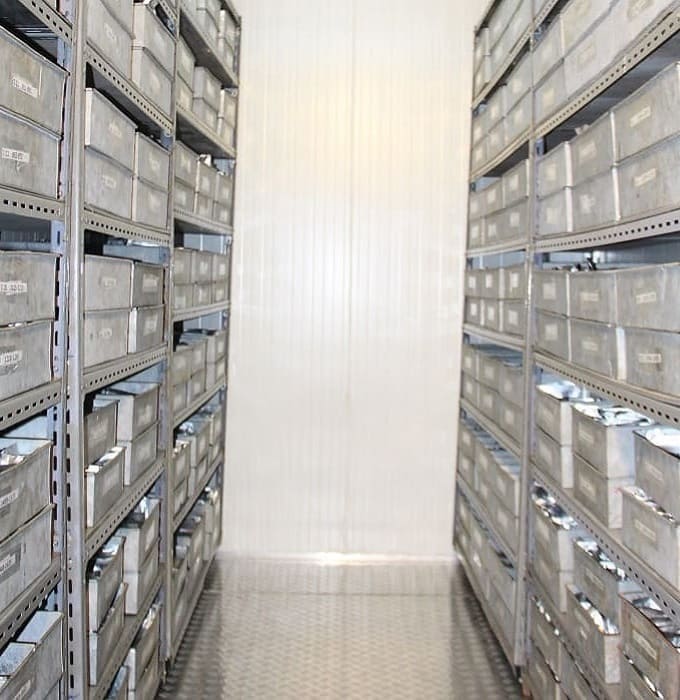
Activities

International Plant Treaty
Cooperation with other organization
Activities
Croptrust and Lao National Genebank
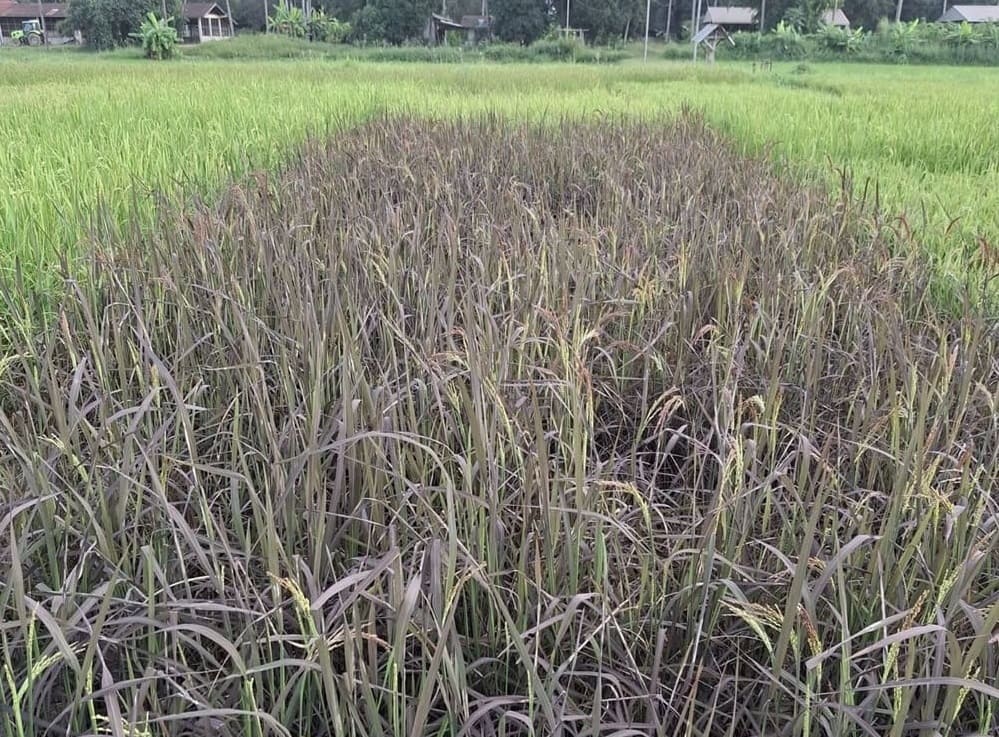
A traditional black rice (Khao Kam)